Tea Shop Automation 101: A Beginner’s Guide to AI Smart Bars and Modern Beverage Operations


The beverage industry—especially the bubble tea and specialty tea market—is becoming increasingly competitive. As shops face higher labor costs, growing order volume, and customer expectations for speed and consistency, many owners are turning to automation as a solution.
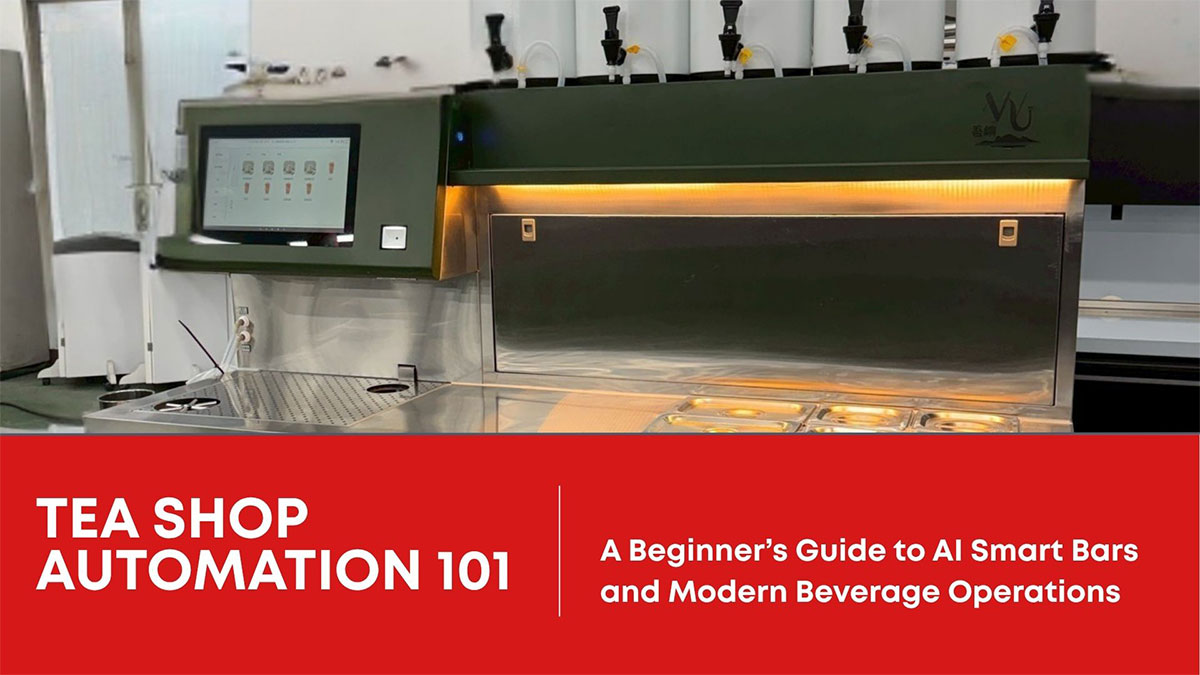
One of the fastest-growing technologies in this space is the AI Smart Bar, which automates liquid preparation with remarkable precision.
This article explains why automation is becoming essential for tea shops, how AI Smart Bars fit into modern workflows, and what types of shops benefit the most from adopting them.
Why Tea Shops Are Shifting Toward Automation
To understand the push toward automation, it’s important to look at the operational challenges that tea shops commonly face today.
Tea shops—especially high-volume ones—experience a unique set of pain points:
- Labor costs rising each year
- Difficulty hiring and training reliable staff
- High inconsistency between shifts
- Long queues during peak hours
- Growing menus with more SKUs and recipe complexity
These pressures create inefficiencies that directly affect customer satisfaction and business growth. As the industry evolves, automation has become a practical strategy for maintaining consistency while reducing operational strain.
The Most Common Operational Challenges in Tea Shops
Before exploring how automation helps, let’s break down the typical workflow problems tea shops struggle with.
-
Inconsistent Drink Recipes
Different employees prepare drinks differently, leading to taste variations that affect customer loyalty.
-
Slow Peak-Hour Output
Manual preparation can bottleneck during busy times, resulting in long wait times and missed sales opportunities.
-
Long Training Time for New Staff
Teaching new staff to master recipes, sugar levels, and preparation steps can take days or weeks.
-
Frequent Manual Errors
Mis-measured sugar, wrong tea ratios, and inconsistent mixing are common in busy environments.
-
Hygiene and Food-Safety Risks
Manual touching, scooping, and pouring increase the risk of contamination and make sanitation harder to standardize.
These challenges illustrate why traditional hand-made processes are increasingly difficult to scale.
How AI Smart Bars Improve Tea Shop Efficiency
AI Smart Bars offer concrete solutions to each of the challenges above, making daily operations smoother and more predictable.
-
Automated Tea and Syrup Dispensing
By automating liquid output, the station ensures that every drink follows the exact recipe—every time.
-
Faster Drink Preparation (as fast as 8 seconds)
High-speed dispensing significantly reduces waiting time during peak periods, improving customer satisfaction.
-
Standardized Recipes Across All Staff
No matter who is working, the output remains consistent, which is crucial for chain stores and franchise expansion.
-
Shorter Training Time
Employees can operate the system with minimal instruction, freeing managers from long training sessions.
-
Simplified Cleaning and Daily Maintenance
Automated rinsing and sanitation procedures reduce the workload while maintaining hygiene compliance. Y-Fang’s AI Smart Bar series features a built-in One-Touch Cleaning function—a single button press initiates the full sanitation cycle, removing the need for manual disassembly or complex cleaning steps.
Together, these improvements create a more stable and efficient shop environment.
Tea Shop Workflow Comparison: Manual vs. Automated Drink Preparation
To better understand the impact of automation, it’s helpful to compare a typical workflow before and after adopting AI Smart Bars.
Manual Workflow
- Measure tea
- Measure syrup
- Adjust sugar level
- Mix manually
- Repeat for each drink
- High chance of error
- Slower performance during rush hours
Automated Workflow
- Select recipe on screen
- System dispenses liquid precisely
- Output in seconds
- Consistent across all staff
- Faster order processing
- Lower error rate
This comparison highlights how automation transforms both efficiency and consistency at the same time.
Which Tea Shops Benefit the Most from Automation?
Although almost any beverage shop can benefit, some operations gain even greater advantages.
High-Traffic Bubble Tea Shops
These shops experience heavy peak hours and need maximum output speed.
Small Shops With Limited Staff
Automation helps reduce the need for multiple trained employees.
Multi-Branch Chains and Franchises
Ensures every branch follows the same recipe and output quality.
Mall Kiosks / Beverage Counters
Small spaces benefit from automated, compact stations that speed up production.
For all of these shop types, automation directly supports stable growth and consistent customer experience.
Addressing Common Concerns About Drink Automation
Despite its benefits, many shops still hesitate because of misconceptions. Here are the most common concerns—clarified.
“Will automation increase our operating costs?”
While initial investment is required, labor savings and higher throughput usually offset the cost quickly.
“Is maintenance too complicated?”
Most modern systems include automated cleaning functions for daily use.
“Can we change or update our drink recipes?”
Yes. AI Smart Bars use digital recipe libraries that can be updated anytime.
By addressing these concerns, shops can make more informed decisions about adopting new technology.
Tea Shop Automation Checklist: How to Evaluate Your Readiness
If you’re considering automation, use the checklist below to determine whether your shop is ready.
Space Availability
Do you have room for a countertop or floor-standing system? The YF-AB50-C (Tabletop) has a footprint of just L700×W650mm, making it suitable for compact counters. The YF-AB80-C (Floor-Standing) measures L800×W800mm, while the YF-AB180-C measures L1800×W800mm and is designed for full bar-counter setups.
SKU Count
How many tea bases and syrups do you offer?
Peak-Hour Volume
Does your shop struggle with long queues?
Labor Structure
Is staff turnover or training a recurring problem?
Growth Plan
Are you planning to expand or standardize multiple branches?
This checklist helps shop owners assess the value automation can bring to their operations.
Conclusion: AI Smart Bars Are Becoming Essential Tea Shop Equipment
Tea shop automation is no longer a trend—it’s becoming a standard for modern beverage operations.
AI Smart Bars help shops produce consistent drinks, reduce manual strain, and streamline workflow. As tea shops continue to face labor and efficiency challenges, automation allows businesses to grow without compromising quality.
For tea shops evaluating commercial AI Smart Bars, the following product options are available:


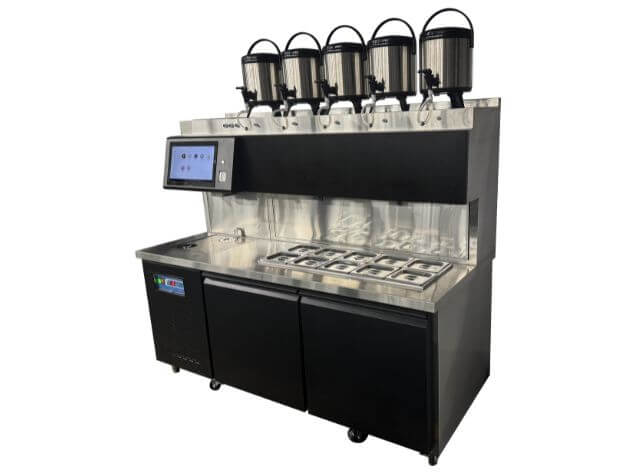
These three models offer different capacities and are suitable for a wide range of shop sizes—from small kiosks to multi-branch franchises.
If you’re considering automating your tea shop or would like expert guidance on choosing the right AI Smart Bar, our team is ready to help.
Contact Us to discuss your workflow, menu requirements, and automation goals.
We can assist with technical specifications, shop planning, and model recommendations to support your automation upgrade.